Legacy
How do you want to be remembered? What will you do during your lifetime that has a positive and lasting impact on your family, community, and/or the world?
You might want to see greater access to food and housing for people in your community. Perhaps you are concerned about animals that are endangered in parts of the world. Maybe you see a need for more kindness among students in your school or people in your neighborhood. We can all see many ways to improve the world in which we live. When we turn those observations into ideas and then actions, we are demonstrating civic leadership. Often, people are remembered for their actions because the impact of their ideas and actions are deep-rooted and long-lasting.
That lasting impact is what we call a legacy. Many people live their lives wanting to make this world a better place. They decide to take actions during their lifetime to improve situations for themselves and others, and they create improvements that continue beyond their lifetime.
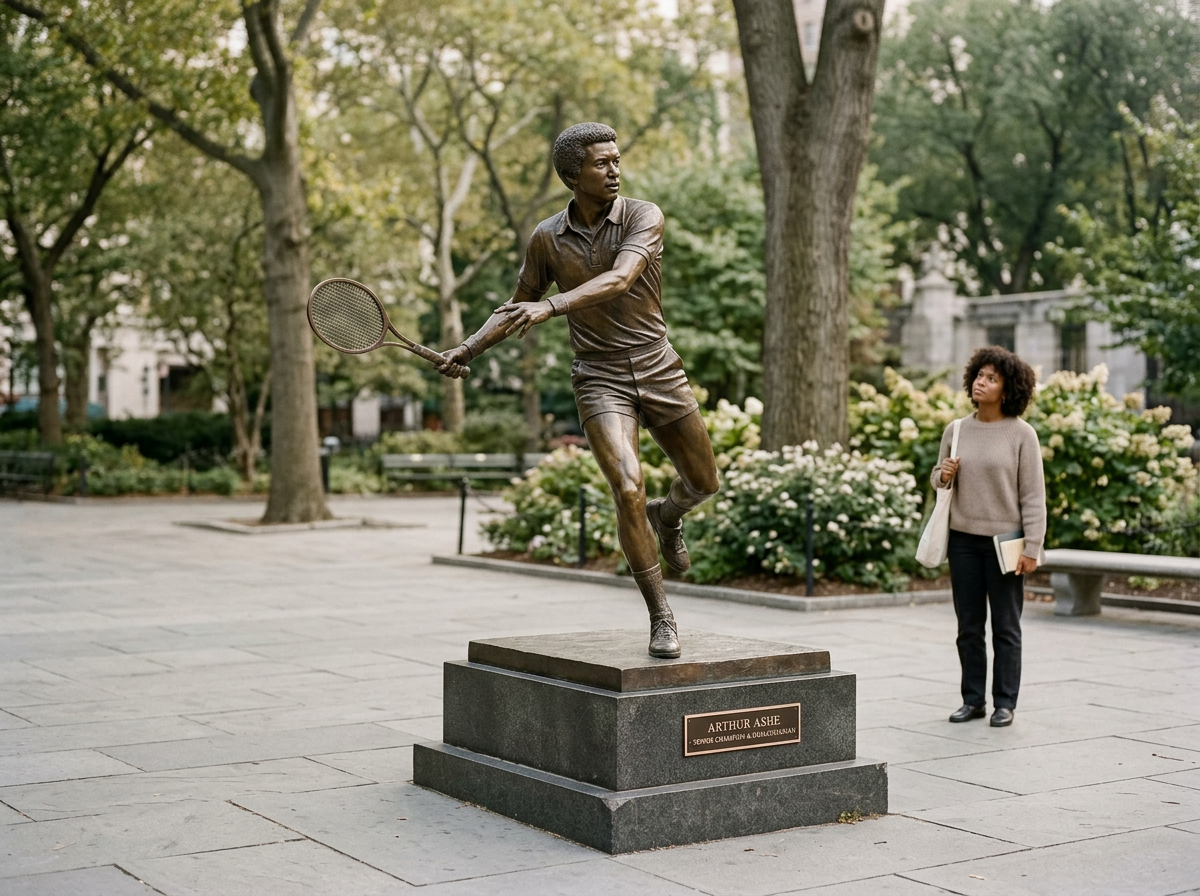
Arthur Ashe created a legacy during his lifetime. When he was a young boy growing up in Richmond, Virginia, Arthur learned that he could not play tennis in certain places because he was black. Growing up in the 1940s and 1950s in the South, Arthur realized that black people had homes, schools, and parks separate from white people. Across town in Byrd Park, the tennis courts were nicer than the courts in Arthur’s neighborhood. There were more courts and they all had new nets and lights! But those courts were only for white players. Arthur dreamed of one day playing on tennis courts and in tennis competitions that were only available to people who were white. Arthur’s hero was Jackie Robinson, a baseball player who became the first black player in major league baseball in the United States. “Someday, I will be the Jackie Robinson of tennis!” At an early age, Arthur set his mind on what would become his legacy. He not only returned to those whites-only tennis courts in Byrd Park in 1968 to play the Davis Cup tournament, these public courts are today found on South Arthur Ashe Boulevard.
With the help of his coaches and family, Arthur went on to play in many tennis competitions and on many tennis courts that were unfriendly to black players. These competitions extended beyond his home state of Virginia to other parts of the U.S. and the world. He broke barriers as a Black tennis champion, and carried his passion for social justice with him wherever he went. As an activist, he fought for civil rights, urban health programs, heart health, HIV/AIDS research, youth sports access, and education.
Arthur’s friend Seth Abraham talks about the “pull” that Arthur had on people like UCLA Basketball Coach John Wooden and U.S. President George H. Bush. This “pull” is because of Arthur’s interests, experiences, and commitment to social justice during his lifetime. (Interview of Seth Abraham, 2022)
Learning and Leadership Activities
Thinking, Writing, and Discussing
What do you want your legacy to be? How will this improve the world? What are some actions you might take in order to create that legacy?
Think about each of these questions and then write a response in your journal. Share your responses with partners and discuss what legacy means to you all.
A Letter to Yourself
Think about your future self. For example, consider yourself 25 years from now. Write a letter to your future self (at that future age) with today’s date explaining what qualities and accomplishments you plan to see developed after those 25 years. These features should relate to your ideas about how you want to be known and remembered. Remember to be gentle and considerate with your future self because a lot will happen in your life over the next 25 years. However, be sure to describe your ambitions and plans for building a legacy that might rely on education, tennis, other sports, career, family, relationships, travel, etc.
After writing your letter, share with the group one message that you wrote to your future self. Find an envelope to address to yourself, insert the letter, and take it home to keep safe for the next 25 years. It’s okay to open your letter to yourself every few years to see if you are on track with your plans.
Legacy Statement & Leadership List
Use a sheet of paper and a pen/pencil for this activity. Write across the top of the page “Legacy Statement.” Then write a statement that describes the legacy that you want to build over your lifetime. The statement should include why you want to leave this legacy behind.
Below the statement, write a list of actions for you to take. These might be actions you take today or when you are an adult; when you are a student or when you are a friend; when you have a family or when you have a job; etc. This list of actions is important for you to consider all of the ways you can begin working on your legacy right now, and what plans you can work toward in the coming years. Also, the more detailed you can make this list, the clearer your vision may become for turning ideas into reality. When you are done, find a place in your home, locker, and/or notebook to keep this list to remind you and check-in on your own progress.