Community
We all belong to multiple communities based on who we are and where we are. For example, you belong to the community in the place where you live. You might also belong to your local school, church, and/or sports community. At the same time, you might belong to communities that include people far away. You might participate in a wider (even virtual) community based on your politics, social activities, and/or global interests. Communities often share common interests, attitudes, and goals. People in communities typically work together and support each other during celebration, conflict, and need.
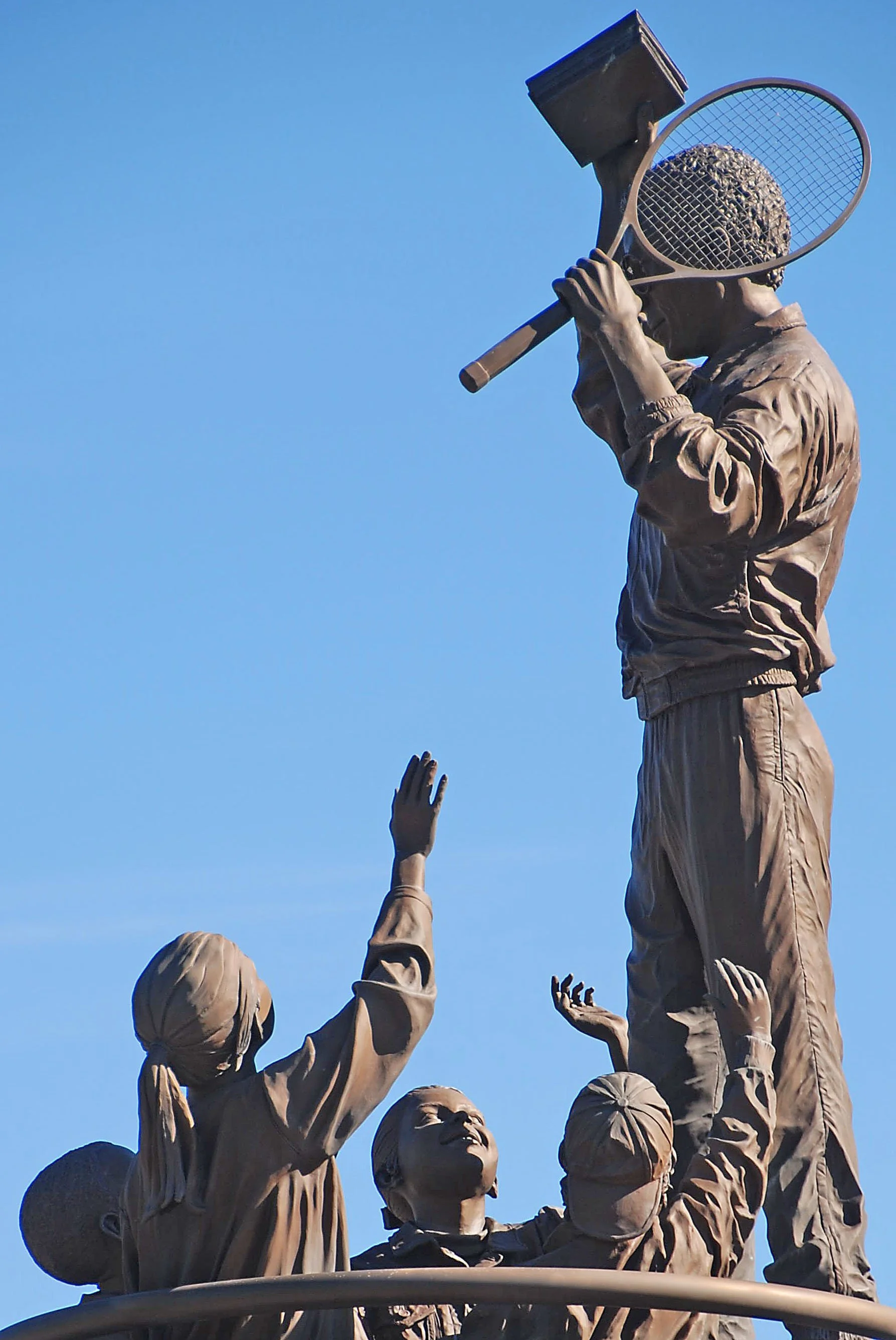
Arthur Ashe was raised in the city of Richmond, Virginia. He is remembered for being born, raised, and buried in Richmond and commemorated with a statue that stands on Virginia’s Monument Avenue (CNN, 2021). Arthur grew up in the Richmond community of Brookfield Park, which is a physical or geographic community. At the same time, he grew up in a segregated community that separated blacks and whites in public spaces and promoted inequities. This segregated community extended far beyond the state of Virginia and even the United States. Over time, Arthur became a key figure in the local, national, and international tennis communities. During his lifetime, Arthur cared deeply for his communities and saw changes in them, including the acceptance of Black tennis players on courts near and far. As a child, Arthur took his cousin Howard to see the tennis courts in Byrd Park, located in the white neighborhood of Grant Park near his childhood home. Arthur wanted to play tennis on one of the many beautiful courts that had new nets and lights. But he could not play on these courts because he was Black. Each time Arthur visited these courts – hoping to play there – he was told that he did not belong on these courts. Years later, Arthur returned to Byrd Park as a member of the U.S. Davis Cup team. Arthur’s family, including Howard, and friends watched and cheered him on while he impressed the crowds and played on the once whites-only tennis courts. Arthur was bringing positive change to his community!
Professional tennis player Ann Koger grew up in Baltimore, Maryland, and recalls playing tennis in Druid Hill Park where the tennis courts and swimming pools were segregated, too. She said that some White, Jewish, and Black tennis players wanted to play together on the same courts, but the law prohibited this from happening. Ann met Arthur when Dr. Robert Johnson brought teams of tennis players to Baltimore for tournaments. She remembers the tennis team coming to her family home to eat meals and in later years, stay overnight, which is another way that community members took care of each other. (Interview with Ann Koger, UCLA)
Learning and Leadership Activities
We All Need Community
Identify a community that is important to you; one that you belong to. Think about all of the ways that you benefit from this community and also how you contribute to this community. What is the value of this community? How has the community changed over time? Talk with a partner or small group about your community. Then, think about these questions: Is there something that you think should change about your community? How might changes bring improvements to your community? What would you like to see in the future in your community? Next, create a vision board to show what you would like your future community to look like, feel like, and be like. You can cut out images and text in magazines to glue onto a piece of cardboard, or you can draw images and icons to depict your vision. Use markers to write words and/or colors to convey your message. Share vision boards with the group and discuss ways to make your future vision a reality.
Collecting Community Stories
Interview and capture stories from people in your community who are willing to share about their experiences and perspectives. Ask community members to identify and describe important changes to your community and share what these changes meant to them. Ask questions that will help you understand the history, culture, shared values, and goals of this community. For example, you might ask:
When do you recall seeing and feeling changes in our community?
How did you feel about these changes?
How were you involved in these changes?
How were you impacted by these changes?
Why do you think these changes came to our community?
Community Memories
Work together to brainstorm a list of the people and events from the past depicted in community statues, memorials, and murals. Hold a group discussion to determine who these people were and what happened during these events commemorated in statues, memorials, and murals. Ask, Why do you think these statues, memorials, and murals were created? What is the significance of where they are placed? Are there statues, memorials, and/or murals that are missing in our community? If so, to commemorate who or what?
Based on responses to the last question, discuss with youth how they might go about advocating and working toward the development of a statue, memorial, or mural that is needed in their community.
Arthur Ashe Monument in Richmond, Virginia